On April 18, 1974, I stood at my grandfather’s graveside in Pointe Noir, Louisiana and made a vow to clear his name and restore his honor. He’d died two days prior on my seventh birthday. As I stared down at his descending casket, I mourned my champion and best friend. I adored him and he’d adored me.
He spoke to me in French, and I’d answer back in kind. I was his Jolie Catin – his baby doll – and he was my everything. The mere mention of his name still conjures up nostalgia of warmth and security. I wasn’t his first grandchild, but as his first granddaughter he doted on me. Had he lived past my seventh birthday, our lives would’ve been drastically different because with him at my side, I was invincible. During that innocent time, I believed I could be anything my young heart could dream up simply because he made it so. I hadn’t yet learned that behind those candy-coated dreams lay the shadowed nightmares of a tortured soul. Not everyone remembers him with the same affection as I do. In fact, few remember him at all; those who do tend to speak in hushed whispers with condescending or sympathetic tones.
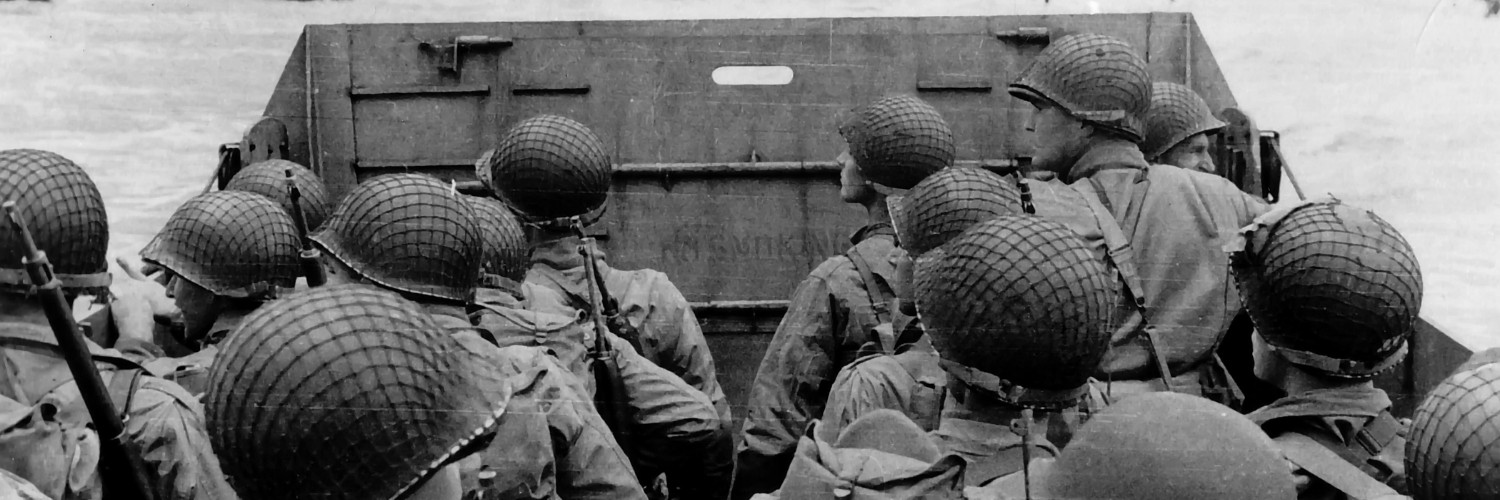
Dupre Lejeune was a Cajun healer with a sharpshooter’s eye. Honored by his community for his healing gift, he was heartbroken at being torn from those who need him most when he was drafted and sent to France in 1944. The Army turned his natural skill with a rifle, honed as a boy hunting the Louisiana bayous, to hunting men. Each bullet unleashed against the enemy ricocheted against his soul, chipping away at his humanity. Battle by battle, Dupre was forced to suppress his vow to heal and embrace his obligation to serve.
Being a coward was a full-time job and according to his hometown, PaPop Dupre was a professional. Diagnosed with “shellshock” only six months after stepping onto the shores of France, he was never able to shed the stigma of the mental illness which plagued him until his death at 49. He was honorably discharged with full disability. Yet, all people saw was a worthless drunk and societal reject repeatedly barred from American Legion meetings. His comrades felt both pity and disgust each time he’d stumble in, speech-slurred and weeping. War-torn men were a familiar sight in the rural farm community of Pointe Noir in Richard, Louisiana. Most were regarded with honor, while PaPop was disrespected and ridiculed for his love of the bottle. I, on the other hand, saw a different version of the man no one could replace.
In 1945, when my grandfather was discharged from the Military Hospital, PTSD was not a recognized disorder. Shellshock held such a stigma; physicians from both wartime field hospitals and VA hospitals declined to include this official diagnosis in his military records. Instead, the reason for his hospitalization after battle was listed as unspecified disease and the National Archives and Records Administration (NARA) still withholds the true diagnosis from his files to this day.
This stigma followed veterans like Dupre Lejeune home from WWII. Instead of basking in a hero’s welcome, these soldiers regularly went into hiding behind walls in an effort to protect themselves from the demons that haunted them—forever burying secrets that could free them from a self-imposed prison of nightmares. Exhuming the truth hidden behind trauma-infused myths required years of start and stop investigation.
I began my search at my mother’s side as a young girl. Mama was a genealogist when genealogy was relegated to an old people’s hobby and no one really cared about the elder’s stories. She dragged me along to every ancient person’s home to comb through dusty photo albums and listen to countless stories of the “good old times” and endless community gossip. I admit that during those early days of my historical education, I was quite bored and not a very apt student. However, all that changed as I grew older and now these are some of my most cherished memories. When Dupre died, my mother was devastated at losing her beloved father and sought every way possible to cling to him. She gathered every shred of personal belonging she could and sought out old family photographs and stories of him from every living family member she could find. PaPop had been the baby of sixteen children—so the family members were numerous!
She wrote to NARA and visited the VA hospitals where he’d been treated. It was all to no avail as she hit wall after wall concerning his military career. She was told his records burned in the great archival fire of 1973 and yet, he’d died in 1974. Surely, there must be something! She was able to piece together very little by which a new record was reconstructed and housed in the National Archives but from there, she was at a dead stand still. We searched anew and wrote both NARA and the VA multiple times throughout my childhood, hoping to receive new information but nothing ever turned up.
Fast forward to my high school and college years and suddenly, I became the family historian on a mission. Mama had instilled a healthy passion for all things historical. My quest would take fifty years of research and two college degrees to discover the true hero behind the man I called PaPop. During this time, I received many awards and honed my research skills, learning all I could and never forgetting my vow to him. I began to research everything I could find on World War II, especially the European Theater where my grandfather had served. I read books, dug through endless documents, watched documentaries, listened to and read veteran interviews, all in the hopes that I would discover some forgotten tidbit concerning Dupre. Alas, one day I finally convinced Mama to give me a copy of his discharge papers that had been reconstructed as well as a photograph of him in uniform. Armed with these tools, I once more went to work.
Fifty years after his death, it was the new technology of the worldwide internet and social media which finally began to unlock the missing pieces of my search. His pieced together discharge and WWII admission records stated that he had been drafted into the Army on September 23, 1943. He’d been inducted into the Army at Camp Beauregard, Louisiana on October 21, 1943, was trained as an infantry replacement and shipped out for Europe in August 1944. The paperwork identified his unit as Company I, 319th Regiment, 80th Infantry Division.
This is where I restarted my investigation. I searched online for information on the 80th Infantry Division and found their website which housed extensive information organized by historian Andy Atkins. From here, I also discovered the Facebook pages of Patton’s 80th Infantry Division, the 80th Division Veteran’s Association and the 80th Division Blue Ridge Veterans. In 2018, I posted a photo of Dupre with all of the information I had obtained thus far about his company and regiment. I asked for help finding out more about his military life during the war. I was quickly redirected to the morning reports for his company. What a wealth of information this turned out to be!
It took me some time to comb through all of the reports and action details to locate my grandfather’s name but suddenly, there he was! I found him picked up by the 80th from the Third Replacement Depot in Mortain, France on August 25, 1944. I spent time gathering every bit of information I could find on the 80th Infantry Division and their advance across France. Armed with wartime maps, I traced my grandfather’s steps through each battle, marking every village he passed through. I read every document, book, newsletter, anything that would give me more information. I was engrossed in the history in a very personal way. It came alive beneath my fingertips in ways it never had before.
Armed with all of my discoveries, my mother approached both NARA and the VA once more. This time she was told that what we had was much more detailed than the burned out records in the archives. We were asked for a copy of our research to once again “reconstruct” Dupre’s records for future generations in the National Archives. At this time, we were given a list of all medals and honors he would be entitled to and Mom applied for those medals to come to her in his stead. I still felt there was more to discover though and so I pushed on with my research, stopping briefly to raise my own three children along the way.
One year later in August 2019, I opened up my messages to find a post from Anthony Guerin in France requesting information on my grandfather for an exhibit he was creating in his hometown of Toul in the Lorraine Valley. I was intrigued as Anthony introduced himself as the president of the Memory Association of Wars in Lorraine, France. Through our many communications over the next months, we discovered that my grandfather had been part of the liberation of the town. That in itself was quite exciting, but it wasn’t the crowning jewel of discovery. Dupre’s background allowed him to go where nobody had gone to liberate his ancestral lands. His secret mission helped free an entire nation and advanced the Allied victory. And no one knew. Until I uncovered the truth.
Anthony was fascinated by the fact that Dupre was a Lejeune as it is a popular name in the Lorraine valley. Imagine his surprise when I informed him of my mom’s genealogical research and how I had continued it with her. We had traced our ancestral lines all the way back to Medieval times and yes, it partially hailed from the Lorraine Valley of France! Anthony put together a beautiful exhibition for the 75th anniversary of the liberation of Toul. He included an extraordinary display about my grandfather and the PTSD that soldiers such as himself suffered after the war. This began a friendship across the seas and we have kept in contact ever since, with him sending me tidbits of information he discovers.
One such treasure was a copy of a small booklet on the 80th along with a more detailed map of the route of the 80th published in 1945 which helped further detail the history of their time in St. Mihiel, Toul, and Villey de St. Etienne. This gave me more information about the things my grandfather was involved in while serving in wartime France. Armed with this new insight, I once again contacted NARA and the VA demanding answers. I did find a few but not many. I found out that Dupre was eligible for the French Liberation Medal were he still alive. This medal is not presented posthumously… yet.
Once again, I hit the research trail delving through more documents and family lore. What I discovered was not only did PaPop help liberate his ancestral lands but he played a major roll in helping to advance the Allied forces to victory through the very background he was persecuted so harshly for in the beginning of his military career. As a green eighteen year old draftee from the backwoods bayous of Louisiana, he was ridiculed for his native French tongue and country accent. He was forced to speak English in an effort to “better educate” him and bring him “up to par” with his more worldly comrades. However, when his unit arrived in France the situation reversed.
Suddenly, Dupre had the upper hand. It was quickly noted by his superiors and commanding officers that he spoke and understood the local language very well. He became a valuable tool the Army desperately needed and one that would gain them advantage over the enemy. PaPop became both a translator and a spy for his CO—garnering valuable information about the location of certain German deployments as well as ferreting out sympathizers in Northern France. He was able to befriend many locals with his southern charm and easy manners, and was often billeted inside their homes where he gained important insight that would help the army greatly. This new, unexpected mission did not come without great sacrifices though. He inadvertently killed the young daughter of a family he had befriended and also watched his best buddy get blown up in front of him while taking Dupre’s turn to pick up rations for the unit.
Like many WWII veterans, my grandfather Dupre did not speak of the war. The little he did share was whispered through drunken tears. His military career remained strictly off-limits with only glimpses of the pain he experienced peeking through his stoic facade over the twenty-four years my mother had with him. He was always an enigma – a puzzling, contradictory character able to evoke both deep disappointment and overwhelming loyalty. He was an amazing musician, a compassionate healer, and a man of deep faith. But few knew him as such – his real identity was hidden behind the labels which would poison his self-worth and pierce his heart with the bloody sword of regret.
How I wish he would have found the 80th Division Veteran’s Association while he was still alive. Here, he would have been welcomed and loved for the very sacrifices he kept hidden deep within his broken heart. This past August I attended the 103rd Annual Reunion. There, I found a whole other family. I told the story of my grandfather and I stood in honor of his name at a beautiful remembrance ceremony. I laughed and I cried and I kept his memory alive. I have fulfilled my promise—my vow is complete in clearing his name and restoring his honor. I am currently writing about his story and my research discoveries in a full-length book. Stay tuned for publication dates.
I have always held the deep-seated belief that every soldier is a hero, no matter how short or long their time served. The minute a person dons the uniform and raises their hand in oath to protect and serve their country, they becomes a hero in my book. For my grandfather and all who served alongside him, in front of him, and came behind him—I salute you and I thank you! The 80th only moves forward!